Transparency International, in collaboration with the United Nations Interregional Crime and Justice Research Institute (UNICRI), has published a regional report under the “Transparency Now” project, which analyzes the cycle of stolen assets caused by corruption in eight Middle Eastern and North African countries: Algeria, Egypt, Jordan, Lebanon, Libya, Morocco, Palestine, and Tunisia. The report includes insights and practical solutions for reducing corruption in each of the listed countries. It is based on the analysis of over 70 documented cases, a review of country legislation and FATF mutual evaluation reports, national questionnaires, and interviews. The study framework investigates processes for the formation, concealment, and cross-border movement of stolen assets, as well as detection and investigative techniques and local and international cooperation.
The report addresses the following major findings at the regional level:
Access to beneficial ownership information
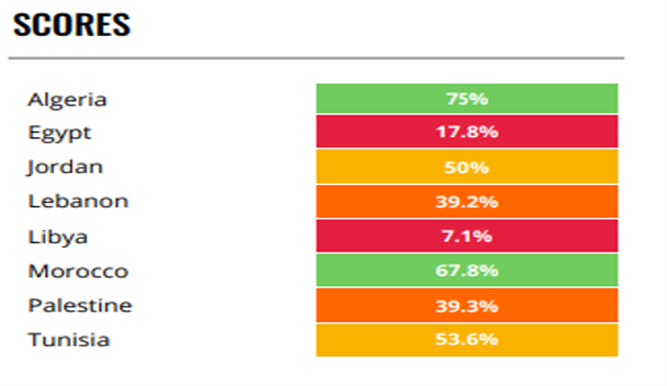
In regard to necessary procedures and investigation techniques, the report confirms compliance with FATF Recommendation 30 on the roles of law enforcement and investigating authorities.
R30: Responsibilities of law enforcement and investigative authorities
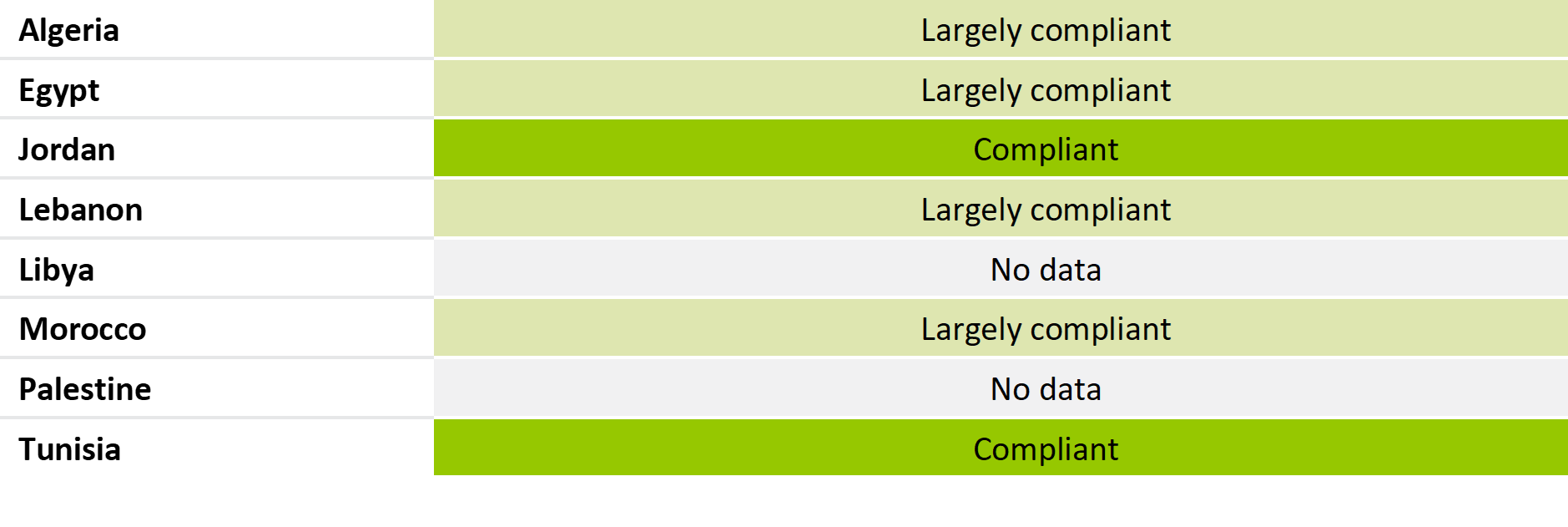
Powers of law enforcement and investigative authorities
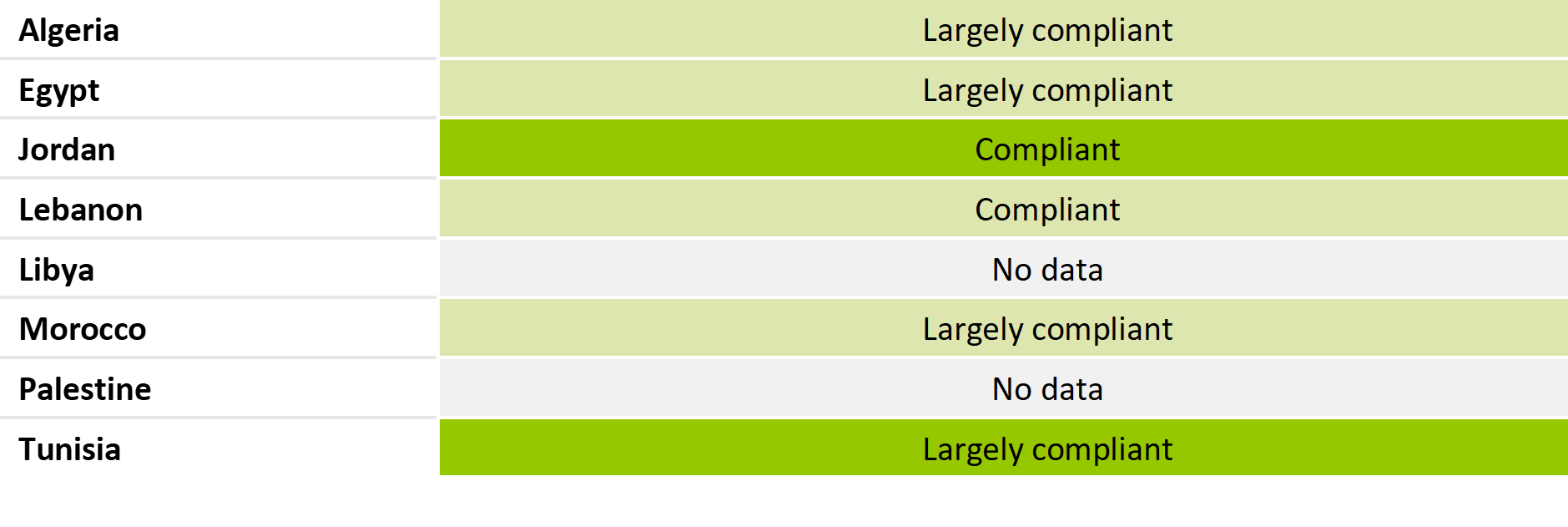
Key findings specific to Jordan are listed below:
- Legislative commitment but operational gaps: Legal frameworks for anti-corruption and anti-money laundering exist, yet implementation effectiveness is limited by coordination problems.
- Concentration of authority to initiate investigations: The Public Prosecution is the central authority for launching criminal investigations, creating a bottleneck that delays responses and exposes files to potential political pressure.
- Deterioration in quality of reporting from non-financial sectors: Reporting of suspicious transactions by lawyers, accountants, real estate agents and company service providers is very low; there is widespread “defensive reporting” which weakens the utility of financial intelligence.
- Limited use of parallel financial investigations and weak operational coordination: Parallel financial investigations are used irregularly, and mechanisms frequently lack effective joint investigative teams.
- Gaps in databases and interoperability: Absence of a unified digital platform linking company registries, beneficial owner data, land registries and asset declarations impedes the speed and depth of investigations.
- Weak use of international cooperation: Low frequency and limited approach to mutual legal assistance requests relative to the volume of cross border flows.
Practical recommendations the report offers for Jordan:
- Improve the quality of reporting from non-financial sectors.
- Adopt mandatory, targeted training programs for lawyers, accountants, real estate agents and company service providers.
- Activate a regular feedback mechanism from the Financial Intelligence Unit (FIU) to reporting entities to improve report accuracy and reduce defensive reporting.
- Diversify pathways for initiating investigations and ensure independent oversight: study enabling effective independent referrals from the Integrity and Anti-Corruption Authority and the FIU, with judicial oversight mechanisms to prevent selective application.
- Set clear deadlines for the prosecution’s response to FIU referrals.
- Expand temporary freezing powers: grant a competent authority the power to issue or request immediate freeze orders that are extendable, and incorporate “stop the clock” mechanisms while awaiting international responses.
- Build unified, interoperable digital registries: launch a central beneficial owner register updated within 30 days and digitally link it to the commercial register, land registry and asset declaration system.
- Require mandatory verification procedures at company incorporation to prevent the creation of shell companies.
- Strengthen parallel financial investigations and operational coordination: legislate mandatory parallel financial investigations for revenue generating crimes and establish permanent joint investigative teams comprising the prosecution, customs, administrative oversight and the central bank.
For more details about the report
This document was produced with the financial assistance of the European Union within the framework of the project Transparency Now: Strengthening Anti-Corruption Efforts in the EU Southern Neighbourhood, jointly implemented by the United Nations Interregional Crime and Justice Research Institute (UNICRI) and Transparency International. The views expressed herein can in no way be taken to reflect the official opinion of the European Union or the United Nations including UNICRI.
Transparency International is a global movement with one vision: a world in which government, business, civil society and the daily lives of people are free of corruption. With more than 100 chapters worldwide and an international secretariat in Berlin, we are leading the fight against corruption to turn this vision into reality.
Transparency International
International Secretariat
Alt-Moabit 96, 10559 Berlin, Germany
Phone: +49 30 34 38 200
ti@transparency.org
www.transparency.org