- Jordan Improves by One Point on the Corruption Perceptions Index 2025
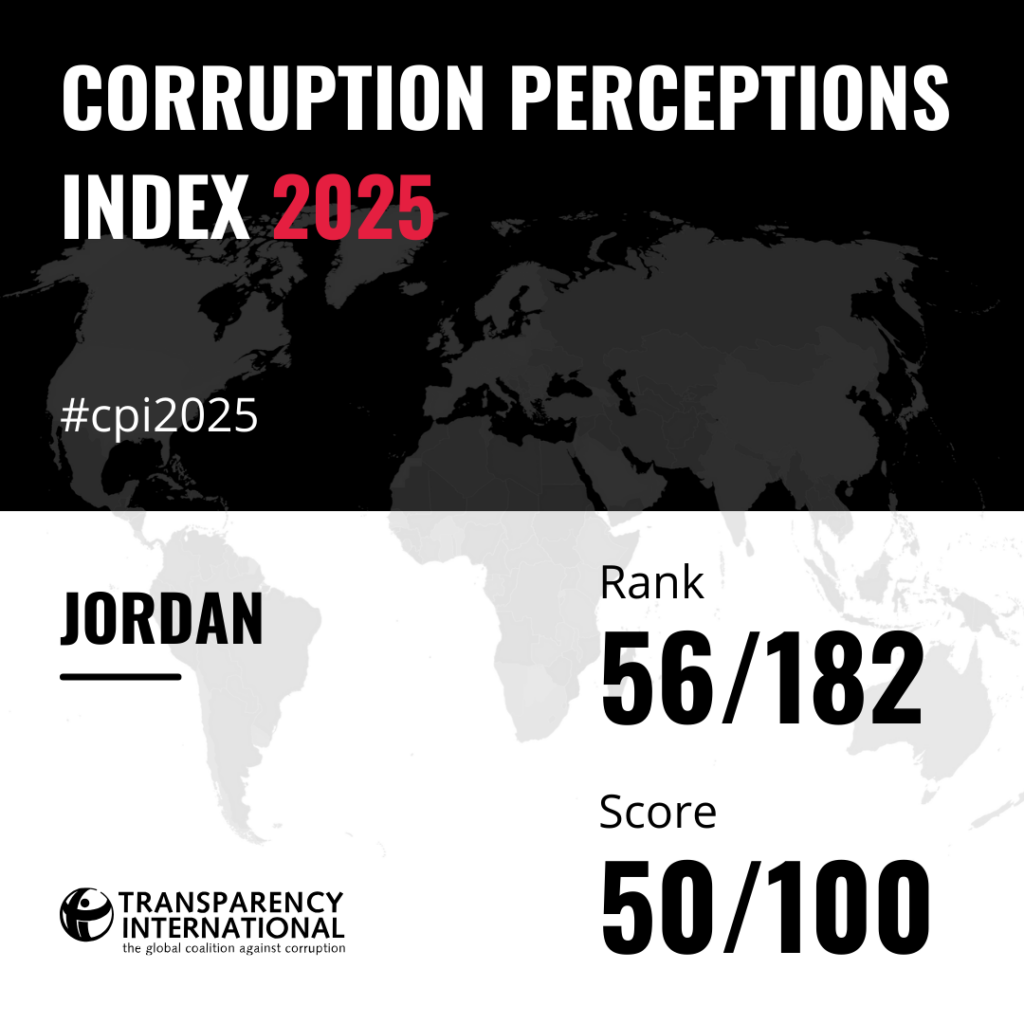
- Jordan rises three places globally to 56th out of 182 countries
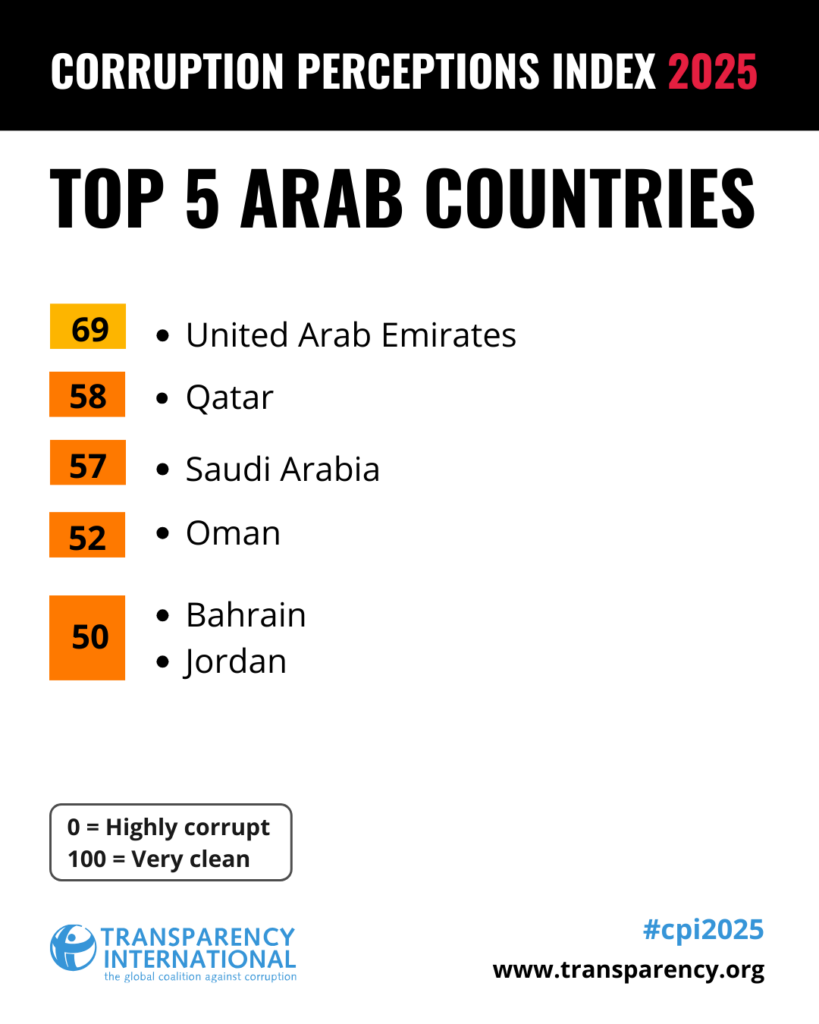
- Jordan moves up one place regionally to fifth among Arab states
Rasheed, the national chapter of Transparency International in Jordan, today publishes the results of the Corruption Perceptions Index (CPI) 2025, compiled from assessments by eight independent international sources.
Key findings
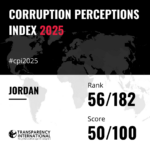
- Jordan improved by one point compared with 2024, scoring 50 out of 100 on the CPI 2025 (where 0 indicates high levels of perceived corruption and 100 indicates very clean). Jordan ranks 56th out of 182 countries and territories assessed.
- The CPI evaluates a range of public‑interest issues, including the ability to enforce the law and deliver justice, integrity of the judiciary and the executive body, the government’s capacity to curb bribery, activation of accountability mechanisms, monitoring of public fund use, prevention of embezzlement and abuse of office for personal gain. The index also covers efforts to tackle corruption, bureaucracy, nepotism and favoritism in public appointments; prosecution of corrupt actors and relevant legal frameworks; protection for whistleblowers and journalists; public and community access to information; and the safe civic space for citizen accountability.
Improvements where mostly related to enhancing good governance and the rule of law in the public sector, following are changes by source
- Jordan’s score on the Bertelsmann Transformation Index improved by 5 points. This source assesses prosecutorial action against office‑holders who exploit their positions for personal gain, government follow‑up on corruption, and presence of fair, clear and effective mechanisms.
- Jordan improved by 4 points on the V‑Dem Democracy Indices (Patterns of Democracy) in 2025 after a 6‑point decline in 2024, reflecting improved judicial performance in taking measures to limit corruption in the public sector—particularly corruption related to embezzlement.
- Jordan rose by 1 point on the World Justice Project’s Rule of Law Index, which measures the capacity to limit exploitation of public funds by government officials for personal gain.
- Conversely, the World Economic Forum source indicated a one‑point decline. This source assesses the prevalence of undocumented extra payments or bribery associated with import/export, utilities, taxation, contract awards and influence over judicial decisions.
- Other sources that showed no change include: the Global Risk Guide by Political Risk Services; the Country Risk Ratings by The Economist Intelligence Unit; the Global Competitiveness Yearbook by the International Institute for Management Development (IMD); and Global Insight’s country risk classifications. These sources examine clarity of accountability over public funds and whether funds are misallocated by officials for private ends or partisan benefit, judicial independence, prevalence of bribery, nepotism and favoritism, and prolonged tenure in public positions.
Regional and global context
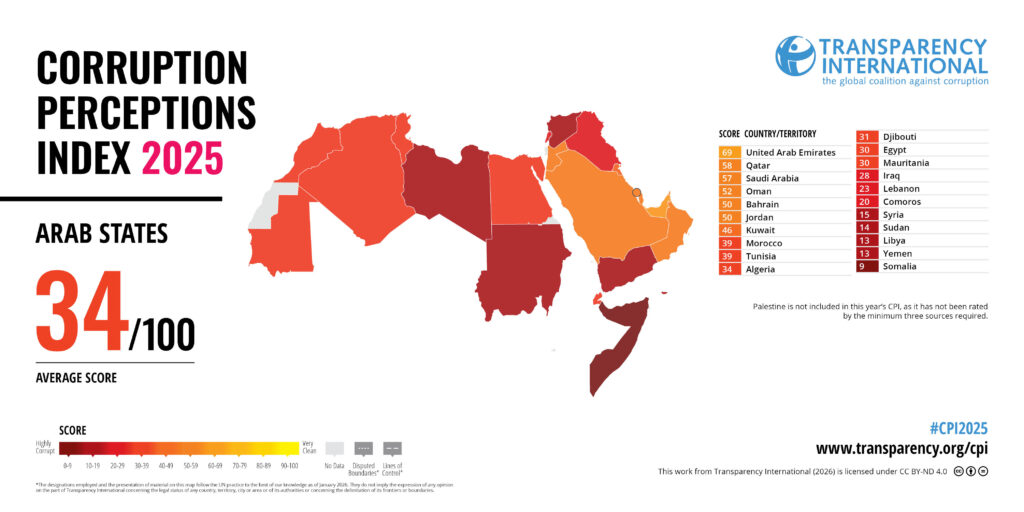
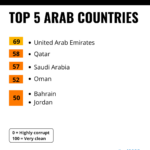
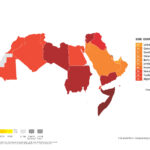
- Regionally, Jordan ranks fifth alongside the Kingdom of Bahrain, following the United Arab Emirates (69), Qatar (58), Saudi Arabia (57) and Oman (52).
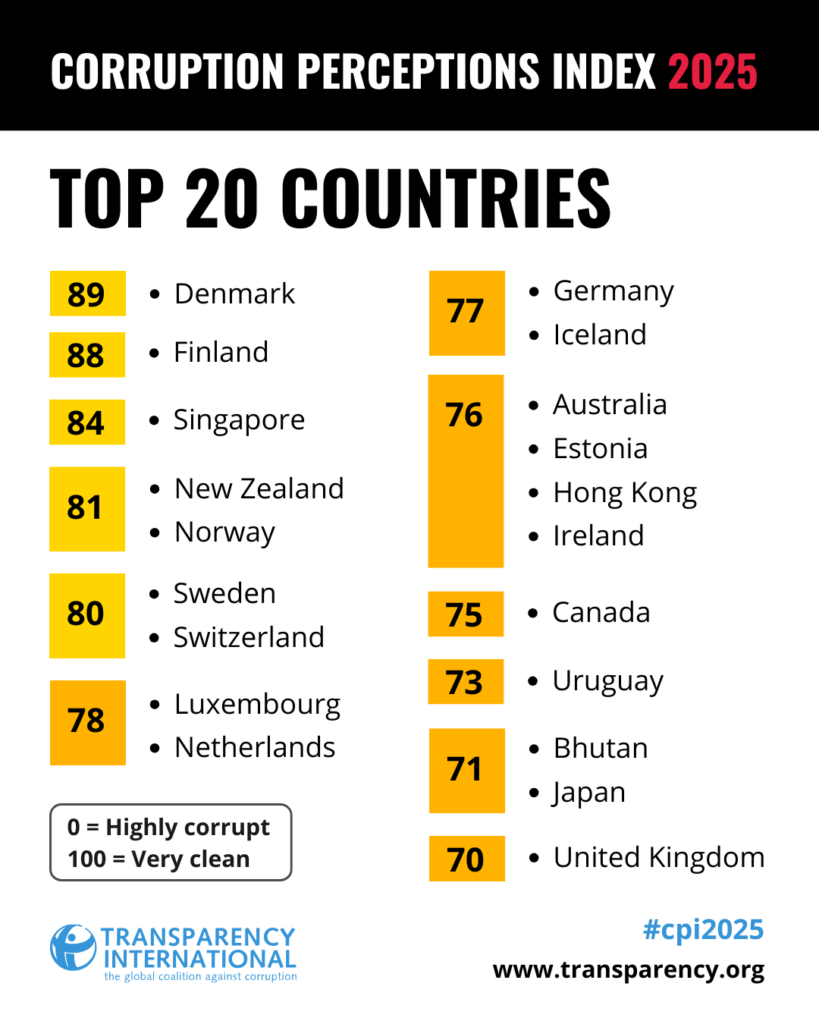
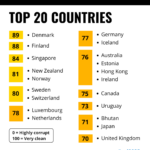
- Globally, Denmark leads with (89), followed by Finland (88), Singapore (84); New Zealand and Norway both scored 81.
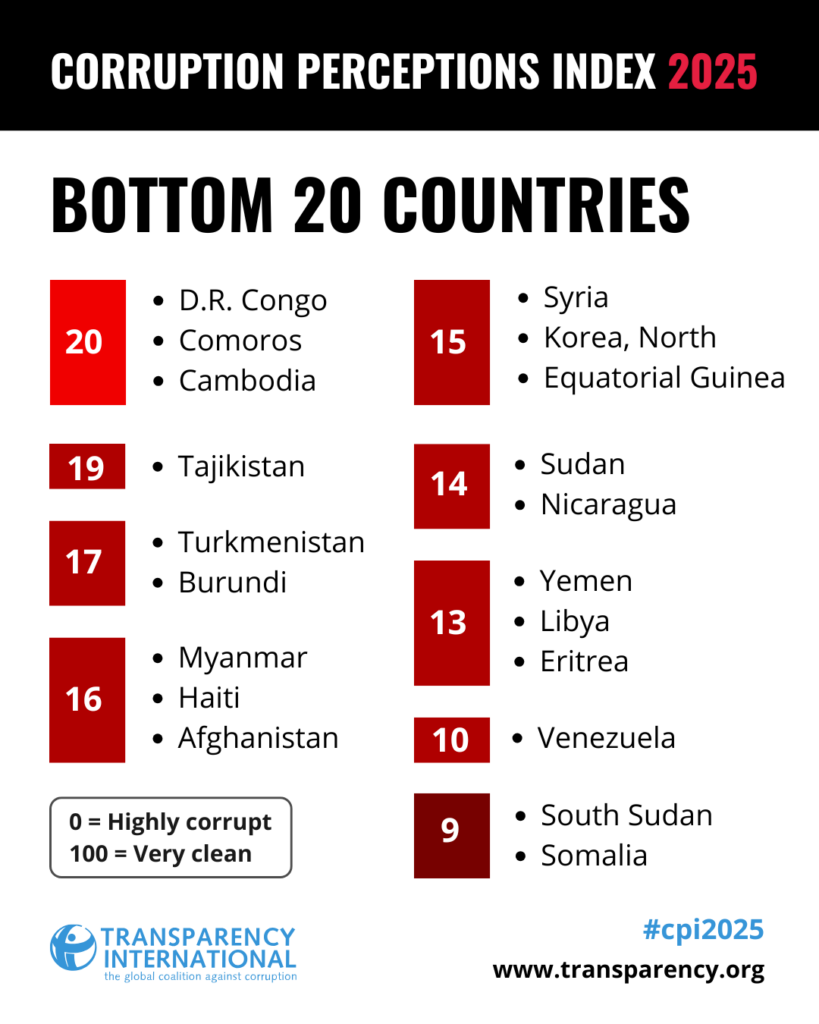
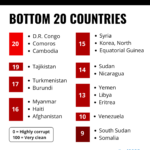
- The lowest scores on the index include Eritrea, Libya and Yemen (13), Venezuela (10), and Somalia and South Sudan (9).
Note: The Corruption Perceptions Index does not measure tax fraud, money‑laundering, illicit financial flows, or other forms of private‑sector corruption.
Recommendations to support Jordan’s further progress on the CPI
- Legislation and international obligations
- Align national legislation with the United Nations Convention against Corruption, relevant bilateral agreements and other international commitments.
- Strengthen good governance across public institutions, ensure separation of powers and financial and administrative independence for the judiciary and oversight bodies, and support capacity‑building to expand their tools and mandates to cover all budget‑funded sectors.
- Ensure all draft laws are reviewed for compliance with international covenants on civil, social, political and economic rights before submission to Parliament.
2. Good governance and anticorruption
- Embed a culture and practices of integrity, transparency, accountability and rule of law in the public sector through training and engagement with religious, cultural, educational and media institutions.
- Improve coordination and cooperation among government entities to enhance citizen service delivery.
- Build public‑sector capacity aligned with contemporary needs and create an enabling environment for innovation in service delivery.
- Adopt participatory approaches that involve citizens, civil society, the private sector, academia, trade unions and political parties to develop sector-specific strategies and action plans.
- Publish public service standards, evaluation methods and complaint mechanisms, and ensure transparent handling within announced timeframes.
- Ensure access to information and standardize electronic and paper forms related to the right of access to information across all government institutions.
- Develop an effective whistleblower protection system to encourage reporting and provide psychological and legal support to those harmed by corruption.
- Prosecute corrupt actors while guaranteeing fair trials.
- Raise awareness among public servants about the importance of integrity values and link codes of conduct to incentives, rewards and allowances.
- Address institutional vulnerabilities to prevent bribery, misuse of public funds, embezzlement and abuse of office for personal gain.
- Strengthen monitoring and reporting channels.
3. Transparency in public spending and information disclosure
- Ensure proactive disclosure of data related to public spending and resource allocation across all sectors, clarify spending objectives and publish feasibility studies in a simplified, periodic and accessible electronic format. This supports evidence‑based accountability, counter rumors and build public trust.
- Publish periodic, updated follow‑up reports on Audit Bureau recommendations and actions taken.
- Disclose details of donations to emergency/disaster funds, aggregate donation amounts, procurement intent and justification, submitted bids, referral costs, payment details and audited financial statements; subject these funds to Audit Bureau oversight.
- Publish and regularly update online financial disclosure statements for senior public officials.
- Build media capacity to improve accuracy and accountability of information.
- Public procurement, government contracts and company registration
- Ensure government entities, including municipalities, adhere to established standards when selecting technical and procurement committees, and disclose and justify procurement decisions.
- Ensure transparent advertisement and contracting in the public sector to prevent irregularities and conflicts of interest.
- Establish transparent central registries that include beneficial ownership information for foreign companies bidding for public contracts or purchasing real estate.
- Prioritize central registries that enable timely access for oversight bodies; make registries publicly available as open, searchable data and ensure civil society and media can access them freely.
- Empower registry administrators with authority to access, verify and cross‑check beneficial ownership data against other government databases.
4. Protection of freedom of opinion, expression and peaceful assembly
- Guarantee freedoms of opinion, expression and peaceful assembly; amend the current Cybercrimes Law to better protect freedom of expression and ensure a safe, independent space for citizens and the media.
- Consolidate democratic practices of participation and accountability, ensuring inclusion of municipalities.
5. Public sector appointments
- Apply transparency to public appointments by disclosing selection criteria and publishing results of all appointment stages.
- Monitor and manage conflicts of interest arising from movement between public offices and private sector roles (revolving doors) within the same functional areas, establish appropriate cooling‑off periods and apply deterrent sanctions.
6. E‑government services
- Ensure accuracy of information published by government entities, accelerate completion and standardization of service automation and portals, gather user feedback and measure public satisfaction.
About Rasheed for Integrity and Transparency (Transparency International – Jordan)
“Rasheed” is a non‑profit civil society organization founded at the end of 2013 and is the sole national chapter of Transparency International in Jordan. “Rasheed” works to strengthen the foundations of good governance based on transparency, integrity, accountability and the rule of law; to raise integrity and combat corruption in the public and private sectors; to increase public awareness of the importance of transparency, accountability and reporting corruption across all sectors; and to enhance the legal and institutional frameworks of the national integrity system through cooperation, experience‑sharing with international, regional and national organizations, and by expanding the availability of data and information to citizens.